Yang Wood Day Master (Gap 甲): Saju Personality, Career & Love
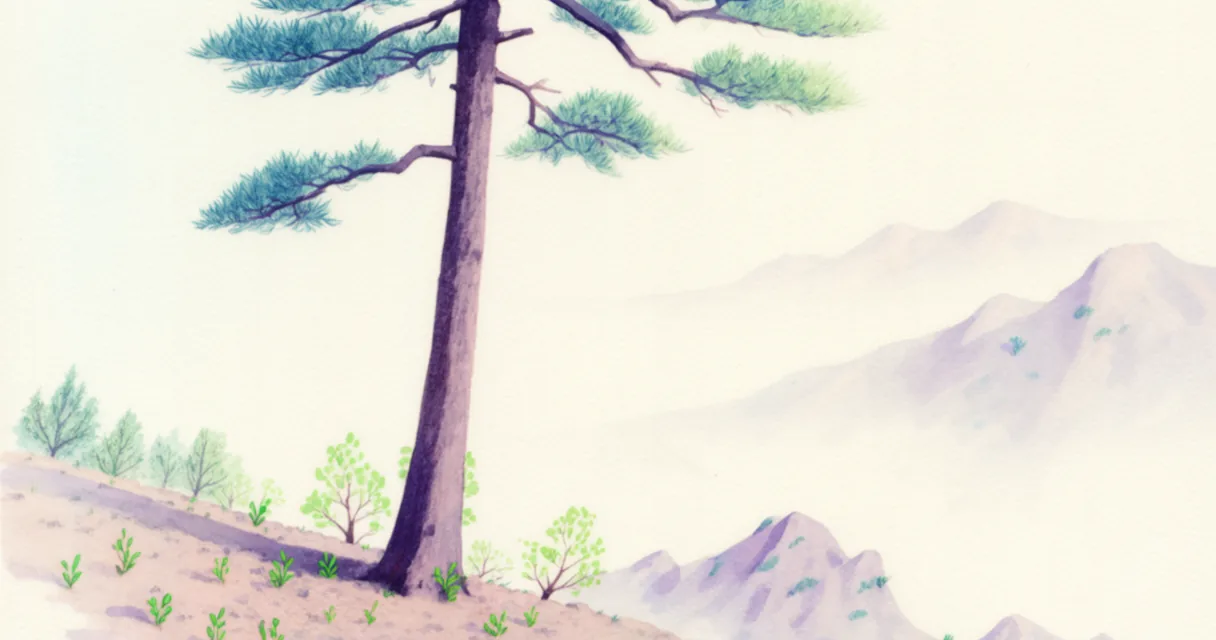
Short answerGap Wood (甲木) is Yang Wood, likened to a great tree reaching straight for the sky; as a Day Master it is defined by initiative and breaking through.
| Element / Yin-Yang | Wood (木) / Yang (陽) |
|---|---|
| Symbol | A central trunk, a pillar, bamboo rising vertically |
| Core keywords | Leading, breaking through, sense of direction, building the framework |
| Strong fields | Planning, startups, leadership roles |
| Helpful elements | Byeong and Jeong Fire (Wood generates Fire), Gye and Im Water (Water generates Wood) |
In this article 8
- What is Gap Wood?
- The symbol and nature of Gap Wood
- The position of Yang Wood
- Water generates Wood: where Gap Wood stands
- What is a Gap Wood Day Master's personality?
- The light and shadow of uprightness
- How is Gap Wood read in each position of a saju?
- Gap Wood as the Year Stem
- Gap Wood as the Month Stem
- Gap Wood as the Day Stem
- Gap Wood as the Hour Stem
- Gap Wood Day Master men and women
- A Gap Wood Day Master in love and relationships
- What careers suit a Gap Wood Day Master?
- What energies does Gap Wood need?
What is Gap Wood?
Gap Wood (甲木), the Yang Wood stem, is the first of the ten Heavenly Stems and the Yang stem that represents Wood (木). I portray Gap Wood as the main character of a great tree reaching unhindered toward the sky. It is the first character of the cycle, beginning its growth like a sprout pushing up through the ground.
There is one premise I always stress when I read the Heavenly Stems. If the Earthly Branches, the characters of the earth, point to the outer environment and reality, the Heavenly Stems, the characters of the sky, reflect a person's pure thoughts and psychology: the blueprint of the mind. So looking at a Gap Wood Day Master means reading how that person thinks and how they bring their will outward. Gap Wood releases the energy condensed through winter onto the surface and reveals it as form; it is the first step from condensation to form (形).
Even among the trees of the same spring, Gap Wood, with its Yang nature, divides off as a great tree that rises straight, while Eul Wood, with its Yin nature, becomes a vine that bends flexibly to fit the situation. That is why I call Gap Wood the most active and pioneering character among the Wood stems, "the chief tree."
The symbol and nature of Gap Wood
| Aspect | Description |
|---|---|
| Nature image | A central trunk, a pillar, bamboo rising vertically, a sprout breaking through the ground |
| Core attributes | The start of growth, initiative, going straight, movement, breaking through |
| Seasonal energy | Early spring: the time of turning from condensation to release |
| Way of working | Structural design that sets the big framework first and then works down to the details |
| Thinking structure | Clear purpose, long-term vision, strategy with direction |
Gap Wood does not lose its inner sense of purpose even when stimulated from outside. Its identity is resilience that stands back up even after being hit, and quick regeneration. The phrase "building the framework" is the archetype of Gap Wood thinking.
The position of Yang Wood
The essence of a Yang stem is outwardness, initiative, the power to radiate, expansion, directness and breaking through. Compared with Eul Wood, the Yin stem of Wood, Gap Wood draws clear lines and moves in a straight line. A solid inner structure, elastic recovery from outside shocks and a strong consistency in its own direction are the grain of Yang Wood. If we compare it to an animal, Gap Wood is a large animal with a muscular trunk. Unlike Eul Wood, which reaches out its feelers in many directions, Gap Wood heads upward in one thick trunk.
Water generates Wood: where Gap Wood stands
To understand Gap Wood, you have to see the structure of Water generates Wood flowing behind it. The energy, resources and information that winter's Water (水) has stored inside come out through Gap Wood. Like water rising from the roots into the trunk, the potential energy that has passed through the period of condensation surges up into concrete form through the structure called Gap Wood. Gap Wood is the entrance through which a living thing moves from mere possibility into the stage of actual growth, and from that entrance it sends the energy it has grown out again as Wood generates Fire.
What is a Gap Wood Day Master's personality?
I read the mind of a Gap Wood Day Master as "a person who decides the direction first and sends the body after it." Rather than reacting immediately, they first set up the overall structure and come down from the big framework to the details. They have the psychology of form (形), drawing drive from the result (what?) rather than the cause (why?).
Strengths
- Design skill that starts from the big picture and secures a step-by-step path
- The power to break through, keeping their own standard and finding alternatives even when they meet obstacles
- Pioneering drive that takes the position first and forms structure quickly
- Endurance and resilience to stand back up after outside shocks
- An upright central axis that guards pride and honor
Shadows
- With such a clear direction, they easily let other people's opinions pass by
- A tendency to miss fine coordination while focusing on the big framework
- Finding it hard to change a path once decided, which can look like stubbornness
- When uprightness goes too far, a rigidity that snaps when it should bend
- Sometimes pushing straight ahead too hard in a rush to see results
The light and shadow of uprightness
Gap Wood's greatest virtue is uprightness. The central axis that does not bend becomes the root of its leadership, pride and drive. But the same uprightness sometimes turns into a shadow. A great tree that cannot bend in the wind breaks. This is why a Gap Wood Day Master, pushing the direction of "I am right" to the end, can make relationships stiff or be badly broken by a single setback. In consultations I often tell Gap Wood, "Bending is not losing." With the grain of Eul Wood, which detours in curves, by its side, Gap Wood's uprightness is completed as a firmness that does not break.
How is Gap Wood read in each position of a saju?
Gap Wood among the Heavenly Stems changes its grain depending on its position. If Gap Wood as the Day Stem is the person's own identity, Gap Wood in the other positions is the energy of the environment surrounding that identity.
Gap Wood as the Year Stem
It is the energy of pioneering and leading that flows through the family. From childhood, an environment of setting one's own direction and taking the lead easily becomes second nature. In the position of ancestors and parents, Gap Wood's temperament of "opening the path first" comes down as a family tradition.
Gap Wood as the Month Stem
The person inherits an eye for building frameworks in the social environment. It is a position that stands out when taking on roles that design the field at work, such as planning or new business. The Month Pillar is the house of social life, so Gap Wood here works as drive that earns recognition outside.
Gap Wood as the Day Stem
This is the main subject of this guide, the "Gap Wood Day Master." The way of setting up the overall structure first and moving down to the details becomes a lifelong pattern of action, and they live as a character who opens the path for the first time. Since the Day Master symbolizes the self in a saju, for a Gap Wood Day Master the very flow of that person's thinking is read through Gap Wood's structure.
Gap Wood as the Hour Stem
Gap Wood in the position of later life and children is the energy of a vision taking firm shape. As they grow older their direction becomes clearer, and their children often show a self-directed, enterprising temperament.
See your own saju chart in Deokeum Manseryeok
Enter your birth date and time to see your Four Pillars, Day Master and five elements. The app is available in Korean only.
Gap Wood Day Master men and women
A Gap Wood Day Master man is the driving type who consistently pushes forward in his own direction. He gains drive when he takes the role of opening the path first in an organization. He values honor and pride, and he shines brightest in a position where he is recognized. But the stronger his uprightness, the more easily he lets the advice of those beside him pass by, so the key is to keep someone nearby who can bend for him.
A Gap Wood Day Master woman has a strong upright central axis and independence, and prefers a self-directed life of building her own structure rather than depending on others. With a clear sense of her own work and vision, her temperament of growing her own tree rather than staying in someone's shade is distinct.
A Gap Wood Day Master in love and relationships
Their structure does not lose its own center even when they open their heart, so they love honestly and directly. They tend to show their feelings clearly rather than expressing them in roundabout ways. But if they cannot accept the other person's pace and curves, the relationship becomes stiff, so the key to keeping it going is an attitude of setting the direction together.
I advise Gap Wood Day Masters, "Don't try to make the other person bend; try bending a little yourself." Just as a great tree casts its shade, a relationship becomes strongest when Gap Wood embraces the other person with its own uprightness.
What careers suit a Gap Wood Day Master?
- Startups and new business: pioneering drive that opens a path for the first time
- Planning and strategy: a sense of design that sets the big framework first
- Leadership and management roles: initiative that sets the direction and pulls others along
- Architecture and engineering: the temperament of a pillar that holds up structures
- Education and coaching: the role of presenting a vision and driving growth
What they have in common is that they deal with "the first" and "the whole." Gap Wood's drive comes alive not in fine-tuning a field that is already set up, but in raising pillars on empty ground.
What energies does Gap Wood need?
| Structure | Energy | Heo Yu's interpretation |
|---|---|---|
| Wood generates Fire | Byeong Fire, Jeong Fire | The outlet that sends the grown structure out as light and activity |
| Water generates Wood | Gye Water, Im Water | Water that soaks the roots and is released as Gap Wood's growth drive |
| Yin-Yang pair | Eul Wood | Curves and detours that complement Gap Wood's straight-line drive |
When I look at Gap Wood, I always check the balance of sunlight and water first. The climate-balance (Johu) theory of the Qiong Tong Bao Jian stresses a proper outlet of Fire (火) for Gap Wood, namely the sunlight of Byeong Fire. However straight a great tree grows, without light it bears no fruit. Gap Wood finally becomes useful when it sends the energy grown through Wood generates Fire out into the activity of Byeong and Jeong Fire. At the same time, the water of Gye and Im Water must support it so the roots do not dry out. Without water Gap Wood is straight but parched; without light it grows but cannot harvest.
The Di Tian Sui's chapter on the Heavenly Stems regards Gap Wood as the foremost Yang Wood and stresses the balance of its roots and water. The popular view praises Gap Wood as "the tree that does not break," but I read one step beyond that view. Gap Wood's real task is not to avoid breaking but to meet sunlight and water and safely open the first step from condensation to form. How to strike that balance is weighed precisely with Yongsin, and if you are curious about the curves along which the energy Gap Wood has grown spreads, continue with the other path of the same Wood in the Eul Wood guide. To compare the grain of all ten Day Masters at a glance, the 10 Day Masters overview and the Wood guide are good places to start.
References
Classics & books
- Original by Jing Tu, commentary by Ren Tiechiao, Di Tian Sui (滴天髓), On the Heavenly Stems, Tongshen chapter, Heavenly Stems: Gap Wood
- Compiled by Yu Chuntai, Qiong Tong Bao Jian (窮通寶鑑), climate balance (Johu), On Gap Wood
Frequently asked questions
QWhat is the difference between Gap Wood and Eul Wood?
If Gap Wood is a great tree reaching straight for the sky, Eul Wood is a vine that bends as it grows to fit its environment. Gap Wood's specialty is breaking through in a straight line; Eul Wood's is curves and detours.
QIs a Gap Wood Day Master stubborn?
It is less stubbornness than a structure with strong consistency in its own direction. Even when it meets outside resistance, it keeps its central axis, quickly finds alternatives and pushes its plan forward. But it also carries the shadow of snapping while trying not to bend.
QWhat is a Gap Wood Day Master good at?
Designing the overall framework first and securing a step-by-step path. Gap Wood's pioneering drive comes out in startups, planning and leadership roles that open a path for the first time.
QWhat energies does a Gap Wood Day Master need?
Byeong Fire (丙火), which sends the structure it has grown out as light, and Gye Water (癸水), which soaks its roots. Only when sunlight and water are in balance does Gap Wood finally grow into a great tree.
QHow do I know if I am a Gap Wood Day Master?
Enter your birth date and time in a manseryeok; if the Heavenly Stem of your birth day is Gap (甲), you are a Gap Wood Day Master. You can check it right away in Deokeum Manseryeok.
See your own saju chart in Deokeum Manseryeok
Enter your birth date and time to see your Four Pillars, Day Master and five elements. The app is available in Korean only.