Yin Wood Day Master (Eul 乙): Saju Personality, Career & Love
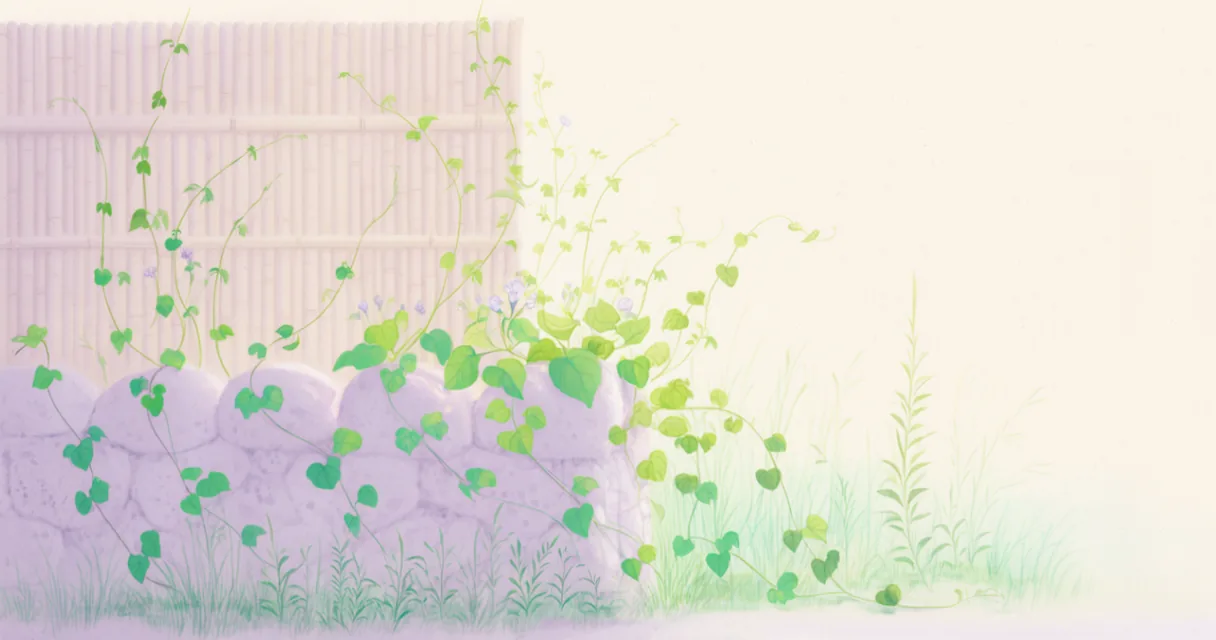
Short answerEul Wood (乙木) is Yin Wood, likened to a vine that bends as it grows to fit its environment; as a Day Master it is defined by flexibility and tenacious adaptability.
| Element / Yin-Yang | Wood (木) / Yin (陰) |
|---|---|
| Symbol | Vines, twigs, grass, leaves, flowering plants |
| Core keywords | Flexibility, branching, adapting, tenacity, coordinating |
| Strong fields | Planning, collaboration, service roles |
| Helpful elements | Im and Gye Water (Water generates Wood), Byeong and Jeong Fire (Wood generates Fire) |
In this article 8
- What is Eul Wood?
- The symbol and nature of Eul Wood
- What it means to be the Wood of a Yin stem
- Not the tenacity of a flowering plant but of a weed
- What is an Eul Wood Day Master's personality?
- Deungragyegap: Eul Wood climbs Gap Wood
- How is Eul Wood read in each position of a saju?
- Eul Wood as the Year Stem
- Eul Wood as the Month Stem
- Eul Wood as the Day Stem
- Eul Wood as the Hour Stem
- Eul Wood Day Master men and women
- An Eul Wood Day Master in love and relationships
- What careers suit an Eul Wood Day Master?
- What energies are good for Eul Wood?
What is Eul Wood?
Eul Wood (乙木), the Yin Wood stem, is the second of the ten Heavenly Stems and the Wood of Yin (陰). I portray Eul Wood as the main character of a vine that bends flexibly as it grows to fit the situation around it. It is a character that observes its environment and finds the gaps to respond, rather than confronting things directly.
For me, the Heavenly Stems are "the characters of the sky": the blueprint of the mind that reflects a person's pure thoughts and psychology. Even among the trees of the same spring, if Yang Gap Wood reaches unhindered toward the sky, Yin Eul Wood is typed as a vine that bends as it grows to fit its environment. In From Today, I've Decided to Be the Main Character, from my Korean book series in which I reread Myeongri as the story of one's own life, Eul Wood is the character of the middle and late part of spring, when the season ripens. After Gap Wood breaks through the ground, Eul Wood takes the role of spreading leaves and branches in many directions.
If you want to first get a grip on where Wood stands among all the five elements, read the Wood guide; and if you look at how the ten Heavenly Stems divide into Day Masters in the 10 Day Masters overview as well, Eul Wood's position becomes clear.
The symbol and nature of Eul Wood
| Aspect | Description |
|---|---|
| Nature image | Vines, twigs, grass, leaves, flowering plants, plants that grow up through cracks in rock |
| Core attributes | Flexibility, branching, adapting, fine detail, continuity, tenacity |
| Seasonal energy | The middle and late part of spring: the time of spreading and differentiation |
| Way of working | Managing several goals at once and coordinating the balance |
| Thinking structure | Multiple scenarios, detours, convergence and compromise |
Eul Wood is skilled at fine-tuning, the way it changes the length of its branches and the size of its leaves according to shade, wind and humidity. It is not trapped in a rigid structure; it changes its shape freely, intertwines with others and quickly occupies new space. If we compare it to animals, where Gap Wood is a large animal with a muscular trunk, Eul Wood is a structure of fins, tentacles and feelers reaching out in many directions. It is a sense of feeling out the way rather than breaking through head-on.
What it means to be the Wood of a Yin stem
Yin stems have the traits of inward orientation, indirectness, elasticity, delicacy, the power to adjust, cooperation and differentiation. Eul Wood makes these concrete as "the spreading of many small branches and an immediate response to small changes in the environment." Rather than breaking through directly, it avoids limits or seeks a detour, and it fits itself to existing structures or creates new points of contact. The true calling of Yin Wood is to draw out a careful, balanced division of labor and cooperation inside social and ecological systems, like the tissue of cells. Even within the same Wood, if the Yang stem Gap Wood Day Master is a structure that sets up the central axis, Eul Wood is a structure that climbs that axis and spreads its branches.
Not the tenacity of a flowering plant but of a weed
The popular view often sees Eul Wood only as "weak grass." I go one step further here. Vines and weeds are not weak; they are tenacious. When trampled, they lie down and stand up again; when the path is blocked, they climb over the wall. The heart of reading Eul Wood is that inside its softness there is a will to live that rarely breaks. This connects with the passage in the Di Tian Sui that says of Eul Wood that "although soft (雖柔)," its roots and life force are tough.
What is an Eul Wood Day Master's personality?
Strengths
- Flexible adaptability that shines in complicated, ever-changing environments
- Coordination skill that manages several interests at once and keeps them in balance
- A sense for avoiding risk by finding gaps and detours instead of colliding directly
- Cooperation that gathers in other people's needs and creates points of contact
- Tenacity and a will to live that rarely give up once they have taken root
Shadows
- Holding several branches at once can slow down decisions
- Indecisiveness, as their own opinions get buried while they fit in with those around them
- A tendency for their flow to scatter and their dependence to deepen when there is no structure to lean on
- When the detour runs long, the real substance shows up late
I sum up Eul Wood's shadow in two words: "dependence" and "indecisiveness." But I do not read these only as flaws. Eul Wood is by nature a plant that grows best when it climbs something. Whether the thing it leans on is a person or a task, once it has the eye to choose a good support, dependence turns into collaboration and indecisiveness turns into prudence. In the end, Eul Wood's task is to decide for itself "whom, and what, it will climb."
Deungragyegap: Eul Wood climbs Gap Wood
A Myeongri saying you cannot leave out when talking about Eul Wood is deungragyegap (藤蘿繫甲). It means that the deungra, the vine, ties itself to the great tree of Gap Wood and climbs. Standing alone, a vine crawls along the ground, but when it meets a straight trunk it climbs it to the sunlight in one go. This is why the old Myeongri masters regarded an Eul Wood with Gap Wood beside it in the saju as precious.
I read this structure as "a vine that has met a good support." For an Eul Wood Day Master, Gap Wood is not just a colleague but a trunk that sets a center in a wavering flow. In real life, a reliable partner, a mentor to learn from or a business partner with clear will plays that role. On the other hand, if Eul Wood tries to carry all its branches alone with no trunk to lean on, it tires easily. Deungragyegap is a saying that tells Eul Wood that "leaning well is a skill too."
How is Eul Wood read in each position of a saju?
Eul Wood as the Year Stem
It is the energy of flexibility and harmony that flows through the family. From childhood, a sense of reading the people around them and linking relationships smoothly easily becomes second nature.
Eul Wood as the Month Stem
The person inherits an eye for coordination and connection in the social environment. It is a position that stands out when taking on roles that link several departments at work, such as collaboration and coordination.
Eul Wood as the Day Stem
This is the main subject of this guide, the "Eul Wood Day Master." The way of managing several goals and situations at once and reaching results along a curve becomes a lifelong pattern of action. If the basic idea that the Day Master means "yourself" is still hazy, going over the Day Master guide first will make the weight of this position read differently.
Eul Wood as the Hour Stem
Eul Wood in the position of later life and children is the energy of relationships widening. As they grow older the range of their coordination deepens, and their children often show a delicate, flexible temperament.
See your own saju chart in Deokeum Manseryeok
Enter your birth date and time to see your Four Pillars, Day Master and five elements. The app is available in Korean only.
Eul Wood Day Master men and women
An Eul Wood Day Master man is the adjusting type who resolves situations gently. Rather than pushing hard, he gets things done by weaving several relationships together. He may be flexible on the outside, but he has an inner wick that tenaciously pushes on in a direction once decided, so many of them, given time, end up making their own place.
An Eul Wood Day Master woman has strong adaptability that responds sensitively to changes in her environment, so she flexibly makes her own place even in complicated situations. Her practical will to live is solid, and she often combines the softness of a flowering plant with the strength of a weed that holds up both the household and her work.
An Eul Wood Day Master in love and relationships
They change their shape to fit the other person and get along with everyone, but they show their true heart slowly. Rather than clashing directly, they love delicately, reading the mood before they approach. With someone they like, they naturally want to rely and lean on them; this is Eul Wood's own tenderness and at times also the seed of a burden.
But if they put off showing their feelings for too long, misunderstandings pile up, so the counterweight that keeps a relationship going is showing them honestly. Choosing someone to lean on without losing yourself: that is what the principle of deungragyegap looks like when carried over into love.
What careers suit an Eul Wood Day Master?
- Planning and coordination roles: a sense of coordination that weaves many elements together
- Service and counseling: empathy that gathers in other people's needs
- Design and content: flexibility that changes shape to fit the environment
- Collaboration and networking roles: the power to connect and create points of contact
- Gardening, education and healthcare: a temperament of differentiation that slowly raises and tends
Eul Wood is a Wood Day Master that draws drive from "what" it will create rather than "why," but unlike Gap Wood it is a type that reaches results through curves and detours. So its true worth shows not in a position where it runs alone as number one, but in a position where it smoothly keeps the game rolling in the middle of complicated interests.
What energies are good for Eul Wood?
| Structure | Energy | Heo Yu's interpretation |
|---|---|---|
| Water generates Wood | Im Water, Gye Water | Condensed resources are released as Eul Wood's drive to differentiate |
| Wood generates Fire | Byeong Fire, Jeong Fire | The outlet through which widened leaves and branches spread as light and fragrance |
| Deungragyegap | Gap Wood | Climbing high along a straight trunk without swaying |
Among the temperament types, I see Eul Wood as the main character of Wood generates Fire (木生火). With its leaves, branches and vines it secures a wide surface area to absorb sunlight, and through the transpiration of its leaves and the fragrance of its flowers it spreads heat and energy around it; it is a buffer zone and a connecting channel. So for Eul Wood, the Fire energy represented by the Byeong Fire Day Master becomes the outlet through which its spread branches finally bloom. If you want to see more about which character becomes the counterweight of your saju, continue to fix Eul Wood's coordinates in the guides on Yongsin and the Ten Gods.
The Qiong Tong Bao Jian's chapter on Eul Wood regards the harmony of light (Fire) and water (Water) in each season as the key, stressing warm sunshine for spring Eul Wood and water to soak it for summer Eul Wood. From the viewpoint of climate balance (Johu), too, Eul Wood is a plant that keeps its balance between light and water. Adding this to the Di Tian Sui's reading of Eul Wood as Wood that is soft but tenacious, I read Eul Wood not as "weak grass" but as the wide buffer zone of Wood generates Fire, and as a tenacious will to live that climbs anywhere once it meets a good support.
If you are curious how Eul Wood's straight-line partner differs, continue with the other path of the same Wood in the Gap Wood Day Master guide.
References
Classics & books
- Original by Jing Tu, commentary by Ren Tiechiao, Di Tian Sui (滴天髓), On the Heavenly Stems, Tongshen chapter, Heavenly Stems: Eul Wood
- Compiled by Yu Chuntai, Qiong Tong Bao Jian (窮通寶鑑), climate balance (Johu), On Eul Wood
Frequently asked questions
QWhat is the difference between Eul Wood and Gap Wood?
If Gap Wood is a great tree rising straight, Eul Wood is a vine that bends as it grows to fit its environment. Gap Wood reaches the same goal by breaking straight through; Eul Wood reaches it through curves and detours.
QDoes an Eul Wood Day Master lack backbone?
It does not lack backbone; it is a structure that runs several scenarios at once and coordinates them. Instead of colliding head-on, it finds the gaps and goes around, but the goal itself is clear and tenacious.
QWhat is an Eul Wood Day Master good at?
Coordinating complicated interests and working into the gaps. Its strengths come alive in roles that weave many elements together and keep them in balance, such as collaboration, service and planning.
QWhat does deungragyegap mean?
It is a Myeongri saying that Eul Wood climbs up Gap Wood. It means that when vine-like Eul Wood meets the support of upright Gap Wood, it reaches high without swaying, and it explains what a reliable colleague or helper means to Eul Wood.
QHow do I know if I am an Eul Wood Day Master?
Enter your birth date and time in a manseryeok; if the Heavenly Stem of your birth day is Eul (乙), you are an Eul Wood Day Master. You can check it right away in Deokeum Manseryeok.
See your own saju chart in Deokeum Manseryeok
Enter your birth date and time to see your Four Pillars, Day Master and five elements. The app is available in Korean only.