Yang Earth Day Master (Mu 戊): Saju Personality, Career & Love
Short answerMu Earth (戊土) is Yang Earth, likened to broad land that never loses its center; as a Day Master it is defined by embracing and mediating.
| Element / Yin-Yang | Earth (土) / Yang (陽) |
|---|---|
| Symbol | The solid earth of plains, plateaus and mountains |
| Core keywords | Center, embracing, buffering, mediating |
| Strong fields | Management, mediation, asset roles |
| Helpful elements | Byeong and Jeong Fire (Fire generates Earth), Gyeong and Sin Metal (Earth generates Metal) |
In this article 9
- What is Mu Earth?
- The symbol and nature of Mu Earth
- The weight of the Earth of a Yang stem
- The catalyst between seasons
- What is a Mu Earth Day Master's personality?
- Strength: a center that does not waver
- Shadow: heaviness and rigidity
- How is Mu Earth read in each position of a saju?
- Mu Earth as the Year Stem
- Mu Earth as the Month Stem
- Mu Earth as the Day Stem
- Mu Earth as the Hour Stem
- Mu Earth Day Master men and women
- A Mu Earth Day Master in love and relationships
- What careers suit a Mu Earth Day Master?
- What energies are good for Mu Earth?
- The environment Mu Earth needs
- How did the classics see Mu Earth?
What is Mu Earth?
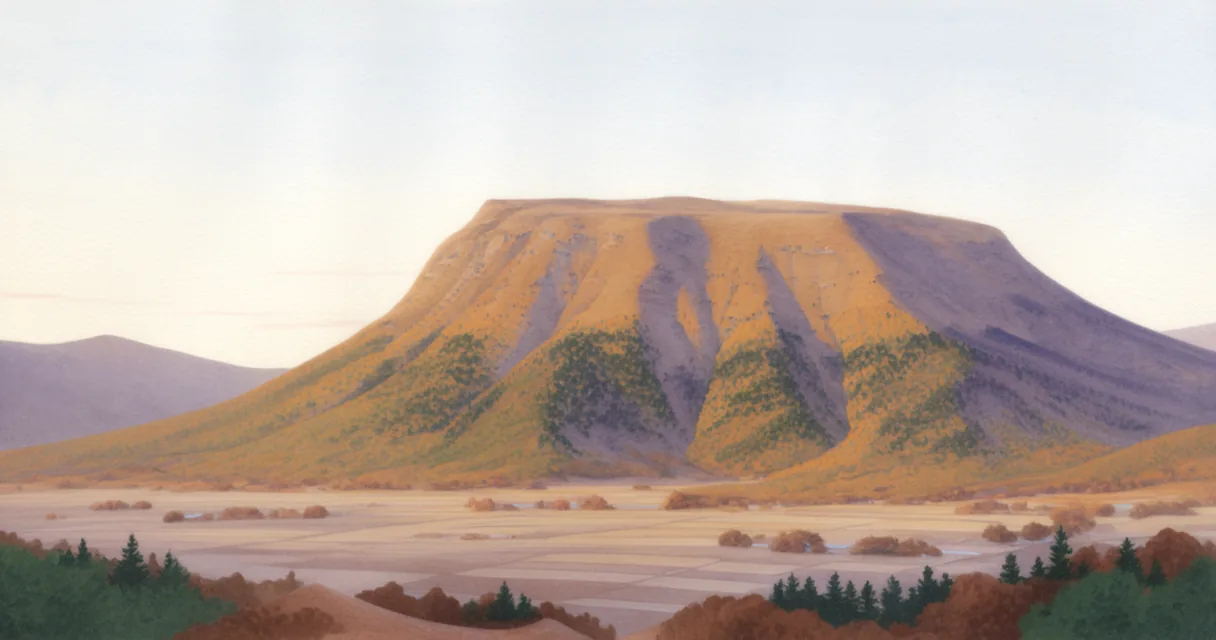
Mu Earth (戊土), the Yang Earth stem, is the fifth of the ten Heavenly Stems and the Yang stem that represents Earth (土). I portray Mu Earth as broad land, a plain, the soil of a plateau. It is a main character that is strong and weighty and does not lose its center even against outside shocks. Among the Earth stems, Mu Earth shows "the essence of substance (質)" most clearly.
In my book From Today, I've Decided to Be the Main Character, part of my Korean book series in which I reread Myeongri as the story of one's own life, Mu Earth is the character of the change of seasons that links one season to the next. It is a catalyst that absorbs and breaks down unneeded energy and stores and sends out the resources that are needed. I see Mu Earth not as a simple medium but as a "facilitator" that sets off a flow between two areas. I suggest continuing with its partner of the same Earth with a finer grain in the Gi Earth Day Master guide, and with the place of the Earth element as a whole in the Earth guide.
The symbol and nature of Mu Earth
| Aspect | Description |
|---|---|
| Nature image | Plains, hills, plateaus, wilderness, the solid earth of mountains |
| Core attributes | Centeredness, embracing, strong adaptability, the power to buffer |
| Seasonal energy | Between seasons: the turning period from one season to the next |
| Way of working | Absorbing shocks, integrating resources and adjusting the balance |
| Thinking structure | Grasping the overall outline, mid- to long-term and combined strategies |
Mu Earth is a catalyst in charge of transformation and buffering between qi and form. It takes in the many energies from outside and coordinates them so that the two areas exchange smoothly. Not a break but continuity and fusion, gradual change: that is the core of Mu Earth.
The weight of the Earth of a Yang stem
Even within the same Earth, Mu Earth as a Yang stem is grounded in outwardness, openness, initiative and expansion. I read Mu Earth as "great land that is not closed off." Rather than stagnating, it deals flexibly with change and, when needed, actively embraces outside elements. Compared with Gi Earth, the Earth of a Yin stem, its cohesion and solidarity are greater, and it gathers many resources such as the moisture, nutrients and microorganisms around it into the center and regulates them. Guarding stability and defense in a large-scale environment, and accepting and brokering many kinds of outside change: this is the role of Yang Earth.
The catalyst between seasons
Mu Earth corresponds to the turning point of Yin and Yang, that is, the change of seasons. In a period when temperature, humidity, sunlight and wind change quickly, Mu Earth at the same time buffers environmental change, prepares new conditions for growth, purifies and breaks down unneeded elements, and gets resources ready for the next activity. When winter's Water passes into spring's Wood, the ground that adjusts temperature, moisture and nutrients in between is Mu Earth. Tidying up the traces of the previous season while gradually calling in the next one: not a break but continuity and fusion is Mu Earth's true calling.
What is a Mu Earth Day Master's personality?
Strengths
- Mediation skill that absorbs many positions and materials and finds a compromise
- Stability and the power to buffer that are not shaken even by outside shocks
- Coordination skill that integrates resources and information and strikes a balance
- A prudent strategy that spreads risk within the big framework
Weaknesses
- Slow to react immediately, so they can seem frustrating
- A tendency for decisions to come late while they try to embrace everything
- Accepting change only gradually, so pushing forward is slow
- Trying to keep their center, they can come across as stubborn
Strength: a center that does not waver
When I counsel a Mu Earth Day Master, the first thing I look at is the "center of gravity." The more complicated the problem with tangled interests, the more Mu Earth shines. It absorbs all the various positions and materials and then finds a mediation plan or compromise to lead to a balanced decision. When everything around it shakes, Mu Earth keeps its place and absorbs the shock. Weighing logic and practical gain, efficiency and stability, change and continuity at the same time while managing resources and spreading risk within the big framework: I call this "mediator-type thinking."
Shadow: heaviness and rigidity
But the same weight also works as a shadow. Even when an unexpected variable comes up, Mu Earth tries to move only after shoring up its inner capacity rather than reacting immediately. It is the virtue of prudence, but from the side it can look heavy and frustrating. Decisions come late while it tries to embrace everything, and when the wish to keep its center goes too far, it hardens into rigidity. Just as seeds cannot take root when the soil is too thick and dry, Mu Earth easily becomes hardened ground without the right environment. That is why I always stress to Mu Earth "Wood to till it and Water to soak it."
How is Mu Earth read in each position of a saju?
Mu Earth as the Year Stem
It is the energy of stability and embrace that flows through the family. From childhood, an environment of holding the center steadily and embracing those around them easily becomes second nature.
Mu Earth as the Month Stem
The person inherits an eye for mediation and integration in the social environment. It is a position that stands out when taking on roles that bring resources and people together at work, such as management and coordination.
Mu Earth as the Day Stem
This is the main subject of this guide, the "Mu Earth Day Master." The mediator-type way of absorbing shocks, integrating resources and keeping the balance becomes a lifelong pattern of action.
Mu Earth as the Hour Stem
Mu Earth in the position of later life and children is the energy of stability deepening. As they grow older their center becomes firmer, and their children often show a dependable, embracing temperament.
See your own saju chart in Deokeum Manseryeok
Enter your birth date and time to see your Four Pillars, Day Master and five elements. The app is available in Korean only.
Mu Earth Day Master men and women
A Mu Earth Day Master man is the reliable type who does not waver. Rather than pulling from the front, he finds his strength when he holds the center and embraces people. A Mu Earth Day Master woman's strengths are a generous capacity to embrace and a sense of stability, so she often takes the central role of keeping the balance even in complicated situations.
A Mu Earth Day Master in love and relationships
They love stably, not easily shaken and embracing the other person widely. They build trust through consistency rather than fickleness. But they tend to show their inner feelings slowly, so the other person may feel distance; expressing their heart first is the key to keeping a relationship going.
What careers suit a Mu Earth Day Master?
- Management and operations roles: coordination skill that integrates resources and people
- Mediation and coordination: a sense of balance that absorbs many positions and creates compromise
- Real estate and asset management: Earth's temperament of guarding value stably
- Public service and administration: prudence that keeps the buffering and balance of the whole system
- Construction and civil engineering: a weightiness that lays a solid foundation
What energies are good for Mu Earth?
| Structure | Energy | Heo Yu's interpretation |
|---|---|---|
| Fire generates Earth | Byeong Fire, Jeong Fire | Spread heat is gathered in as Mu Earth's resources |
| Earth generates Metal | Gyeong Metal, Sin Metal | The outlet that sends gathered resources out as fruition |
| Yin-Yang pair | Gi Earth | Fine adjustment that complements Mu Earth's large buffering |
In terms of the five elements, what gives birth to Mu Earth is Fire generates Earth, and what Mu Earth gives birth to is Earth generates Metal. The Fire of ripe summer makes the Earth of the change of seasons, and that Earth leads on to the fruition of autumn's Metal. If you want to know more about the place of the generating cycle, read the generating cycle, and to see how Earth is used as a Yongsin, see Yongsin and Earth as well.
The environment Mu Earth needs
When I look at Mu Earth, I first gauge "is this living ground or hardened ground?" Soil that is merely thick has no life in it. Mu Earth needs three touches.
- Wood (木) loosening the soil (疏土): Gap Wood and Eul Wood till the hard soil and let it breathe. The right amount of Wood controls Earth is a welcome control (剋) that keeps Mu Earth from hardening.
- Water (水) enriching it: Im Water and Gye Water soak the dry soil so that it can raise all things. But if there is too much water the soil is washed away, so balance is the key.
- Fire (火) warming it: Byeong Fire and Jeong Fire warm the cold soil and create the conditions for growth. Fire generates Earth becomes the ground that fills Mu Earth's resources.
Only when Mu Earth, tilled by Wood, soaked by Water and warmed by Fire in this way, sends out its fruition again through Earth generates Metal is "the land that carries all things" completed.
How did the classics see Mu Earth?
The Di Tian Sui's chapter on the Heavenly Stems regards Mu Earth as thick, heavy Yang Earth and treats it as "the ground that carries all things (載物)." It says that in spring and summer its energy opens up and raises all things, and in autumn and winter it gathers them in and stores them. The reading is that when the soil is thick, it needs the warmth of Fire to shine and water so as not to dry out.
The Qiong Tong Bao Jian's chapter on Mu Earth looks first at climate balance (Johu), that is, the cold and heat of the season. It says that Mu Earth in deep winter must be warmed by the warmth of Byeong Fire, and Mu Earth in high summer must be soaked rich with the water of Gye Water. It places the harmony of water and fire at the center of reading Mu Earth.
I respect this popular view of "a solid mountain," but going one step further, I read Mu Earth as a "catalyst" that links qi and form. It is the center of gravity, and the position of transition that absorbs shocks and makes the flow harmonious. If you want to unpack this thinking pattern through the grain of the Ten Gods (Yuksin), read the Ten Gods overview, and to compare it side by side with the other Day Masters, continue with the 10 Day Masters overview. If you are curious about the fine-grained partner of the same Earth, I hope you will see the other grain of Earth in the Gi Earth Day Master guide.
References
Classics & books
- Original by Jing Tu, commentary by Ren Tiechiao, Di Tian Sui (滴天髓), On the Heavenly Stems, Tongshen chapter, Heavenly Stems: Mu Earth
- Compiled by Yu Chuntai, Qiong Tong Bao Jian (窮通寶鑑), climate balance (Johu), On Mu Earth
Frequently asked questions
QWhat is the difference between Mu Earth and Gi Earth?
If Mu Earth is the soil of wide plains and plateaus, Gi Earth is small soil like a vegetable patch or a rice paddy. Mu Earth takes things in on a large scale and mediates; Gi Earth adjusts finely in small units.
QIs a Mu Earth Day Master stubborn?
It is less stubbornness than a stability that does not lose its center even against outside shocks. It is the prudence of moving gradually after shoring up its inner capacity rather than reacting immediately.
QWhat is a Mu Earth Day Master good at?
Absorbing conflict and integrating resources. Its strengths come alive in roles such as management, mediation and assets, where many positions and resources are gathered and kept in balance.
QWhat environment does a Mu Earth Day Master need?
An environment where Wood (木) tills the hard ground to let it breathe and Water (水) soaks the dry soil to make it rich. When it is warmed by Fire (火), Mu Earth becomes the foundation that raises all things.
QHow do I know if I am a Mu Earth Day Master?
Enter your birth date and time in a manseryeok; if the Heavenly Stem of your birth day is Mu (戊), you are a Mu Earth Day Master. You can check it right away in Deokeum Manseryeok.
See your own saju chart in Deokeum Manseryeok
Enter your birth date and time to see your Four Pillars, Day Master and five elements. The app is available in Korean only.